- Car & Truck Ignition Systems Components Products
- sku: 9915707728204673
- SMP KS33
KS33 SMP CORP Standard Ignition Knock Sensor
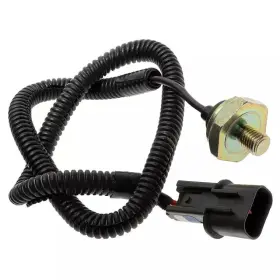
| Brand | SMP CORP |
|---|---|
| Manufacturer Part Number | KS33 |
| Part Type | IGNITION SENSOR |
Review SMP CORP Genuine Standard Ignition Knock Sensor
The SMP KS33 Standard Ignition Knock Sensor is an essential automotive component designed to monitor engine performance and detect knocking or pinging sounds caused by premature fuel ignition. This sensor plays a crucial role in maintaining optimal engine efficiency and preventing potential damage to the engine.
The sensor itself is compact, with dimensions of approximately 1.6 inches in length, 0.8 inches in width, and 0.4 inches in height. It is designed to be easily installed in most standard automotive applications. The sensor housing is made of high-quality materials, ensuring durability and resistance to harsh engine environments.
The SMP KS33 utilizes advanced microelectromechanical systems (MEMS) technology to detect vibrations and translate them into electrical signals. These signals are then transmitted to the engine control module (ECM) for analysis. The sensor is capable of detecting even the slightest knocking sounds, allowing for timely intervention and preventive maintenance.
The knock sensor operates on a simple principle: it contains a proof mass that vibrates in response to engine knocking. The sensor converts these vibrations into electrical signals using piezoelectric elements. The sensitivity of the sensor can be adjusted using the ECM, ensuring accurate detection of engine knocking in various driving conditions.
Installation of the SMP KS33 Standard Ignition Knock Sensor is a straightforward process, typically involving disconnecting the old sensor, connecting the new one, and resetting the ECM. It is recommended to consult the vehicle's service manual for specific installation instructions.
The SMP KS33 Standard Ignition Knock Sensor is an essential upgrade for any vehicle seeking optimal engine performance and longevity. By continuously monitoring engine health and alerting the driver to potential issues, this sensor provides peace of mind and helps prevent costly engine repairs.
The SMP KS33 Standard Ignition Knock Sensor is a crucial component in the engine management system of modern vehicles. It monitors the engine for knocking or pinging sounds, which can be caused by detonation or premature ignition of the fuel in the engine cylinders. Here are some pros and cons of buying this sensor:
Pros:1. Improved Engine Performance: A faulty or malfunctioning knock sensor can lead to reduced engine performance and poor fuel efficiency. Replacing the sensor can help restore the engine's performance to its optimal level.
2. Prevent Engine Damage: Ignition knock can cause significant damage to the engine if left unchecked. A knock sensor can help detect and prevent this damage by alerting the driver or the engine control unit (ECU) to take corrective measures.
3. Cost-Effective: Compared to other engine components, the cost of a knock sensor is relatively low. Replacing it can save you money in the long run by preventing more costly engine repairs.
4. Easy Installation: The knock sensor is usually a straightforward replacement, and most vehicles do not require any additional tools or modifications to install it.
Cons:1. Diagnostic Challenges: Sometimes, the symptoms of a faulty knock sensor can be similar to those of other engine issues, such as a faulty oxygen sensor or a malfunctioning fuel pump. This can make it challenging to diagnose the problem accurately, leading to unnecessary repairs or replacement of other components.
2. Limited Lifespan: Knock sensors have a finite lifespan and will eventually wear out or fail. While the replacement cost is relatively low, the ongoing cost of having to replace the sensor can add up over time.
3. Dependence on Sensor Calibration: The knock sensor's accuracy depends on its calibration. If the sensor is not calibrated correctly, it may generate false positives or fail to detect actual knocking sounds, leading to misdiagnosis or unnecessary repairs.
Conclusion:The SMP KS33 Standard Ignition Knock Sensor is an essential component of a modern vehicle's engine management system. The pros of buying this sensor include improved engine performance, prevention of engine damage, cost-effectiveness, and easy installation. However, the cons include diagnostic challenges, limited lifespan, and dependence on sensor calibration.
Recommendation:If you suspect that your vehicle's knock sensor is faulty or malfunctioning, it is recommended that you have it diagnosed by a qualified mechanic. They can use diagnostic tools to determine if the sensor is indeed the cause of any engine issues. If the sensor is found to be faulty, replacing it can help restore your engine's performance and prevent further damage. If you are unsure about the installation process, it is recommended that you have a professional mechanic install the sensor to ensure that it is correctly calibrated and functioning optimally.
Details:
Genuine Smp corp standard ignition knock sensor KS33: parts. Shipping carrier substitutions may be made at our determination in an attempt to reduce shipping cost the customer. Electrical parts are not returnable. Parts must be resalable and in the original packaging.
specifications ignitioncomp:
- brand: Smp Corp
- mpn: Ks33
- part type: Ignition Sensor
seller ignitioncomp:
- city: cockeysville, maryland
- rating: 85.7%
- # reviews: 10
returns ignitioncomp:
- policy: no returns
general ignitioncomp:
- category: Auto Parts > Car Truck Accessories > Ignition Systems Components
offer ignitioncomp:
- prices: $15.00–$64.95
- item condition: New
- in stock #: 5
- sold #: 14
- options: ship-to-home
- started: july 13, 2025
- availability: in stock
shipping ignitioncomp:
- class: standard
- transit: 4-8 days
- type: fixed
- service: standard
payments ignitioncomp:
- other
- wallet: apple-pay
- credit card: visa
Similar Items:
- Standard Motor Products 61773wj New Smp Ignition Switch For 1994-1997 Acura Integra It ensures proper functionality and is a crucial component for starting the vehicle smoothly SECURELY.B961 compatible with various years of aura integral, switch identified by manufacturer part numbers 61773WJ, c 566, CS1015. The standard motor products ignition switch is designed for 1994 -1997 ...(January 12th, 2025)
- Standard Motor Products 76113vthn For 2020-2021 Cadillac Ct5 Direct Ignition Coil Boot Smp 3.0l V6 Parts geek - for 2020 -2021 Cadillac CT5 direct ignition coil boot Smp 76113VTHN 3.0L v6 V6: review fitment notes to ensure proper fit condition: new brand: standard motor products notes:.e.m. Replacement: yes 12 month warranty fitment notes: vehicle: engine: 2020 -2021 Cadillac CT53.0L V6...(February 17th, 2025)
- Standard Motor Products 99817brrm For 2005-2006 2008 Mazda Tribute Ignition Coil Smp 2.3l 4 Cyl 12 month warranty fitment notes: vehicle: engine: 2005 -2006, 2008 Mazda TRIBUTE2.3L 4 Cl. Manufactured in Poland. Tested in the lab and on vehicles to ensure precision performance. Advanced thermoplastic coil connector ensures proper connection and resists fractures caused by heat thermal ...(February 21st, 2025)
- Standard Motor Products 593ne41 For 2004-2005 Bmw 645ci Ignition Knock Detonation Sensor Smp Item specifics: attachment method: direct, connector gender: male, quantity: 1, shape: oval, type: plug in, material: metal, plastic, mounting hardware included: no, bolt mount, terminal 4, bullet. We source our pictures directly from the manufacturer and may not immediately receive updated photos ...(February 23rd, 2025)
- Standard Motor Products 365aa33 For 2008-2015 Chevrolet Captiva Sport Ignition Switch Connector Smp 2008 2009 Document for 2008 - 2015 Chevrolet captive sport ignition switch connector Smp 2008 2009 :: brand: standard ignition, warranty: 12 month warranty, part type: connector, compatible years: 2009 2010 2011 2012 2013 2014 2015 . We source our pictures directly from the manufacturer and ...(February 25th, 2025)
- Standard Motor Products 772xj19 For 1990 Chevrolet C70 Ignition Switch Smp Consequently, the picture displayed may not always reflect most recent changes, though this occurs rarely. Document for 1990 Chevrolet C70 ignition switch Smp:: brand: standard ignition, warranty: 12 month warranty, part type: switch. They may even discontinue an item and replace it with updated ...(February 26th, 2025)
- Kem W130 Ignition W130 smp Gb-160 Distributor Condenser Porshe Vw Please make sure this item will work for your application. Fits the vehicles below. Please compare part numbers pictures. Be sure the part you're buying is correct for your application...(March 13th, 2025)
- Smp 30997ff Ignition Knock Detonation Sensor For 1990-1995 Chevrolet Lumina 3.1l V6 Shipping cost: free. Compatible years: 1990 1991 1992 1993 1994 1995 . Shipping handling service: please refer to shipping section. 1991 Chevrolet lamina engine: 3.1L V6;.: Smp ignition knock detonation sensor for 1990 - 1995 Chevrolet lamina 3.1L V6: brand: standard ignition, ...(March 17th, 2025)
- Smp 43615gh New Ignition Misfire Sensor For 2003-2004 Kia Sorento 3.5l V6 New Smp ignition misfire sensor for 2003 - 2004 KIA serenity 3.5L V6: brand: standard ignition, warranty: 1 year, part type: sensor, fitment notes: engine: , camshaft / crankshaft position sensor camshaft sensor; sensors. 2004 KIA serenity engine: 3.5L V6;. Shipping handling service: please ...(March 17th, 2025)
- Smp 66076ju New Ignition Switch Connector For 1998-2002 Oldsmobile Intrigue Connector gender: male. Shipping cost: free.: new Smp ignition switch connector for 1998 - 2002 Oldsmobile intrigue: brand: standard ignition, warranty: 1 year, part type: connector, starter connector connector; connectors; connector; pigtail; pigtails. Shipping handling service: please refer to ...(March 18th, 2025)
- Smp 879ni22 Ignition Knock Detonation Sensor Connector For 2015-16 Alfa Romeo 4c 1.7l Harness length - inches: 16-1/2, housing in: 1, inches: 1.25, material: plastic, number of splice connectors include: 2, of wires: included: yes, terminal gender: female, quantity: type: blade, water resistant: weatherproof sealed: wire gauge GA: 14, wiring 17.75, mm: 450.85. Whether you are doing...(March 19th, 2025)
